
“I knew there had to be a way to systematically spend less on shipping. I just didn’t know where to start.”
Fair enough.
Most Directors already have a pretty good idea that something isn’t quite right. Maybe shipping costs have been creeping up. Maybe surcharges seem to appear everywhere. Maybe the carrier service isn’t what it used to be.
But knowing you could do better and knowing where to start are two very different things.
I thought it was worth putting together a simple guide.
Nothing revolutionary. No secret carrier hacks. Just a time-tested process we’ve seen work again and again.
The six steps at a glance
- Review your shipping invoices
- Find the cost outliers
- Build your shipping profile
- Review your carrier performance and costs
- Test the market
- Build the internal business case
1. Start with your shipping invoices
Pull 3–6 months of invoices from every carrier.
And I mean every carrier: International shipments. White-glove deliveries. The occasional pallet. Those unusual shipments that only happen a few times a year. The longer the period, the better.
Put everything on the table. Then look at the basics:
- How many shipments are you sending?
- How much are you spending?
- How frequently are you shipping?
- Where are those shipments going?
- Which services are you using?
There’s no reason to do all of this manually. You can use an automated tool like our free shipping audit app, or even try using your preferred AI tool and do some of the analysis in-house.
The important part is not the tool, but getting the complete picture.
2. Find the shipping cost outliers
Look for the things that don’t look normal.
- Maybe there’s one particular product box that keeps triggering surcharges.
- Maybe one customer consistently ships to a residential or rural address.
- Maybe you’re dealing with repeated service failures — like stolen chocolates.
Write the pain points down. You’ll need them later.
3. Define your shipping profile
Now zoom out. What do you actually ship?
- How many shipments are you sending each week?
- What sizes?
- What DIM weights?
- Which destinations?
Look at your best and worst months and find the median. Multiply that by 12, then add your best estimate for next year.
Does the number make sense? More importantly, does it reflect where you actually expect the business to go?
This becomes your baseline. And when you start talking to alternative carriers or negotiating with your current one, that baseline is your leverage.
You now have something much more useful than a vague statement like “we spend a lot on shipping.”
4. Take a hard look at your carriers
Now let’s talk about the carriers themselves.
Do you have a good relationship with your carrier? Do they answer when you call? Are they helpful when something goes wrong?
Great. Those things matter. But don’t let a good relationship replace an objective review of the numbers.
Look at how your costs have evolved over the last three years compared with the carrier’s announced annual GRIs.
If your costs have stayed at or below the GRIs, you’ve probably done a pretty good job.
If your costs have gone up much faster, figure out why.
- Maybe your shipping profile changed.
- Maybe accessorials increased.
- Maybe the discount structure that looked great three years ago doesn’t look so great anymore.
The numbers will usually tell you where to look.
5. Test the carrier market
This doesn’t automatically mean switching carriers.
In fact, sometimes the best option is to stay exactly where you are — but negotiate from a better position. Start there.
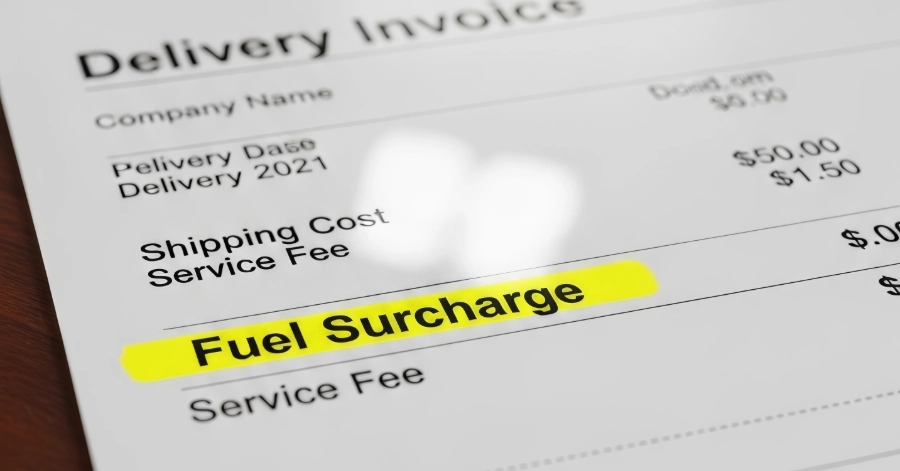
→ Look at your current discount structure. Are you getting fantastic rates on premium services you barely use while ordinary fuel surcharges are quietly eating away at your budget? And when does your contract come up for renegotiation? Has your carrier rep contacted you yet?
→ Then test the market. Take the shipping profile you built in Step 3 and show it to other carriers.
What would they offer? What would they need from you? What would a transition look like?
→ You can also look into group purchasing. What are the volume requirements? Minimum spend? Contract length? Other commitments?
Again, you don’t have to change anything.
But there’s a big difference between saying “we’re happy with our carrier” and saying “we looked at the alternatives and decided our current carrier is still the best fit.”
6. Decide what makes sense — then sell it internally
Once you’ve done the work, you still have one more problem: Getting everyone else on board. A reasonable path might look something like this:
First, talk to Operations or the Warehouse team.
- How deeply integrated is your WMS with the carrier’s software?
- Have they worked with competing solutions before?
- What would they think about changing providers?
They probably won’t love the idea. That’s normal.
Then talk to Finance and Procurement.
- Are the savings actually significant?
- What happens to the budget you free up?
- Can that money be invested somewhere else in the department?
If the savings are substantial, get ready for the next conversation.
Senior management may want to see the business case. So have the presentation ready.
- How would you explain the opportunity in five minutes?
- What changes? What stays the same?
- How much do you save?
- What’s the risk?
Keep it simple.
Sounds like a lot of work? That’s because it is.
If you’re thinking this sounds like a lot of work, you’re right. And that’s probably the biggest reason most Logistics and Operations Directors never get around to doing it.
They have warehouses to run, customers to keep happy, people to manage and about 47 other things landing on their desk every day.
But let’s play along for a second.
Imagine it’s this time next year.
You open the budget and look at your carrier costs. And instead of being where you expected them to be, they’re 20% lower. What would you do with that money?
Would you hire someone? Invest in new equipment? Fund a project that’s been sitting on the shelf?
That’s really the point of cutting carrier costs.
It’s not really about getting a few cents off a shipment. It’s about what those savings allow the business to do next.