

De Minimis Is Gone—Now What for Your Business?
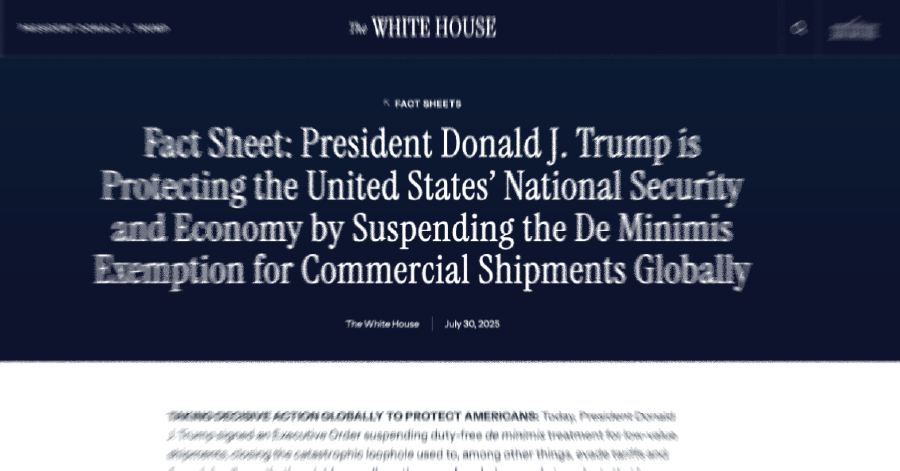
The U.S. has officially ended the De Minimis duty exemption—yep, the one that let small, low-value parcels breeze through customs without paying duties. It’s been around for nearly a century, but in the past decade, it had become the secret sauce behind fast, cheap shipping from mega-retailers like Shein and Temu. Now, that VIP pass just expired.
Despite it being one of the most turbulent years for the logistics sector in recent history—with American pickup trucks held at the Canadian border and new terms like “transshipment tariffs” coined weekly—this news is not something we can overlook. Let’s spend a few minutes understanding why.
What was De Minimis, anyway?
Think of De Minimis as an express lane for small packages. If your shipment was under a certain value—$800 for the U.S.—it bypassed duties and taxes.
This policy wasn’t a big deal for decades. But Chinese e-commerce giants, like Shein and Temu, turned it into an advantage. Shipping parcels directly from overseas factories to U.S. consumers—one order at a time— allowed them to avoid hefty tariffs and keep prices low. However, as I wrote last year, that’s only part of their secret recipe.
De Minimis shipments grew from 134 million parcels in 2015 to 1.36 billion in 2024. No wonder policymakers decided to close the loophole in April for shipments arriving from China. Now, it’s gone for the rest of the world.
Why does this matter?
Without De Minimis, international shipping just got more expensive, more complicated, and more bureaucratic.
- Logistics companies and postal services are scrambling to comply with the new U.S. regulations. Some carriers have even paused international deliveries while they figure it out.
- Air freight rates should increase. Chinese sellers relied heavily on air shipping to speed up delivery, using the money they saved on duties. Now, that cushion is gone.
- And for major carriers like UPS, FedEx, and DHL? Expect smaller volumes, network adjustments, and maybe even downsizing. After all, those duty-free parcels made up a significant share of cross-border e-commerce.
Who wins, who loses?
Let’s start with the losers:
- Small overseas merchants who ship niche products. Many don’t compete with U.S. brands, yet they’ll face higher costs and tougher compliance requirements.
- Consumers will see prices jump—low-cost items may rise 15 to 45%. But will someone who bought $9 jeans now pay $145 for U.S.-made ones? Doubtful.
- Logistics providers such as importers, consolidators, and 3PLs, will face higher landed costs. They must revamp processes, pricing, and compliance systems.
U.S. manufacturers could be considered winners, as they lobbied for this change in hopes of gaining ground. However, consumer behavior might not change as much as expected.
Lastly, Shein and Temu aren’t going anywhere. They’ve been prepping for this for years—diversifying production and figuring out new ways to keep prices competitive.
What’s next for global trade?
Complexity. Higher costs. Tighter enforcement, too.
Both Customs and Border Protection (CBP) and the President have made it clear that economic security is national security and that tariffs are not going away. This means more scrutiny and enforcement of duty collection, as well as added friction to supply chains.
And if the EU and Japan follow suit (spoiler: they probably will), we could see global trade tighten even further.
What should businesses do now?
Treat this as the start of a new era—not just a hiccup.
- Review landed costs – Recalculate pricing and margins with duties factored in.
- Diversify suppliers – Look beyond single-country sourcing to spread risk.
- Explore fulfillment hubs – Nearshore or use bonded warehouses to optimize costs.
- Stay informed – Regulations are evolving, and early adjustments will beat last-minute scrambles.
The end of De Minimis marks a major shift in global trade. The loophole is closed. However, with smart planning, your business can still find its lane. Want to chat about strategies for staying ahead? Let’s connect and map out your next steps.